
Hybrid Work, the Daily Commute, and the Pressure on Employee Benefits
As modern workplaces settle into a permanent rhythm of hybrid working, the commute back to the office remains a core part of the weekly routine. Forward-thinking businesses are continuously looking for ways to improve employee satisfaction, strengthen retention, and meet ESG carbon-reduction commitments. Offering benefits that align with environmental responsibility is no longer a differentiator — for many organisations competing for skilled talent, it is table stakes.
Why Traditional Company Car Schemes No Longer Work?
Traditional company car schemes have become increasingly rigid, administratively demanding, and tax-inefficient. For employees, the rising cost of vehicle ownership and fuel makes the daily commute a significant financial burden. For employers, delivering a flexible car benefit without taking on significant financial exposure or administrative overhead has become genuinely difficult. Standard leasing arrangements rarely offer the agility modern workforces need, leaving a gap between what employees value and what businesses can realistically provide.
EV Salary Sacrifice as a Practical Employee Benefit
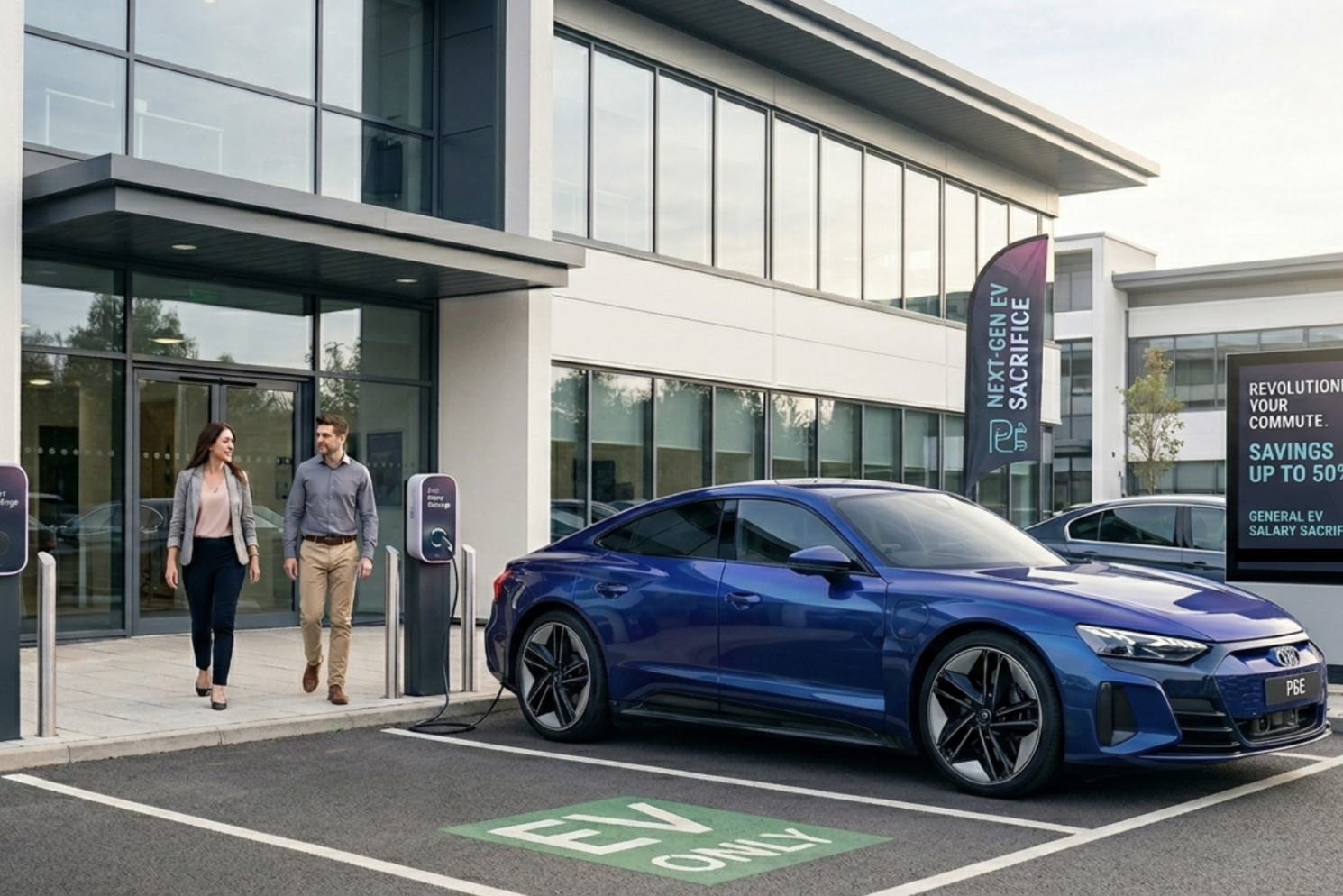
This is where an EV salary sacrifice scheme — also known as a salary exchange scheme — offers a workable solution. By partnering with Pink Salary Exchange, businesses can offer employees a structured, cost-effective route to driving a new electric vehicle as part of their benefits package.
How an EV Salary Exchange Scheme Works
An electric car salary sacrifice scheme allows an employee to lease a brand-new EV by giving up a portion of their gross salary before income tax and National Insurance (NI) are calculated. Because the deduction is made pre-tax, the employee’s taxable income is reduced, generating meaningful savings on the overall cost of the vehicle.
In exchange, the employee receives a brand-new electric car. While a Benefit-in-Kind (BiK) tax applies, the government maintains a heavily subsidised BiK rate for zero-emission vehicles — significantly lower than the equivalent for petrol or diesel cars. The combined effect of pre-tax deductions and a low BiK rate means employees can drive a new EV at a substantially lower cost than a comparable personal lease arrangement.
Salary Exchange Solutions: Key Differentiators
While the fundamentals of salary sacrifice for electric cars are well established, the quality of implementation varies considerably between providers. Salary Exchange solutions have been designed with both employer and employee needs in mind, bringing three specific features worth noting:
- A Competitive Panel of Lenders: Rather than relying on a single funding source, Pink Salary Exchange works with a broad panel of lenders. This gives employees access to competitive rates across a wide range of vehicle choices, rather than being limited to one provider’s inventory or pricing.
- Flexible Contract Terms: Recognising that circumstances change, the solution offers agreement terms ranging from six months to four years. This flexibility makes the scheme more accessible to a wider workforce, including employees who might hesitate to commit to a long-term arrangement.
- The “Community” Feature — Addressing Employer Risk: One of the most cited concerns for employers considering an EV salary sacrifice programme is what happens when an employee leaves mid-contract. Pink Salary Exchange addresses this directly through a digital platform that allows vehicles to be transferred between participating employers, rather than reverting liability to the original company. This substantially reduces the financial exposure that has historically made some businesses reluctant to offer the benefit.
A Practical Step Toward Net Zero — and a Stronger Benefits Package
Implementing an electric vehicle salary exchange scheme gives employees a cost-effective way to drive a new EV, while supporting the employer’s broader sustainability objectives. For HR and finance teams evaluating how to enhance their benefits offering without increasing headcount costs, a well-structured EV salary sacrifice scheme is worth a close look.